
Cloudy shower doors. White rings around the faucet. Spots on the windows that come back no matter how often you wipe them. That’s hard water, and it shows up in a lot of Utah homes.
The good news: most hard water stains come off with things you already have under the sink. Here’s what to use, how to do it on each surface, what never to do, and how to keep the spots from coming back.
What hard water stains are
Hard water carries dissolved minerals, mostly calcium and magnesium. When a drop dries on glass or metal, the water leaves and the minerals stay behind. Do that every day and the spots build into a chalky film, then into crusty scale around faucets and drains.
The U.S. Geological Survey says hard water is common across much of the western United States, and that it can cause mineral buildup in plumbing, fixtures, and water heaters (https://www.usgs.gov/special-topics/water-science-school/science/hardness-water). Your city’s annual water quality report often lists how hard your local water is.
Because the stain is mineral, not dirt, regular soap won’t do much. You need something that dissolves the mineral, which usually means a mild acid.
What to use, from vinegar to a commercial descaler
- White vinegar. The go-to for light to medium spots. Use it full strength on glass and fixtures.
- Lemon juice. Works the same way as vinegar, just milder. Handy for small spots on chrome.
- Baking soda paste. A little baking soda and water makes a gentle scrub for stubborn spots on plain glass and chrome. Use it on its own, after you rinse the vinegar off.
- A commercial descaler. For thick buildup that vinegar won’t move. Pick one labeled for glass or for your fixture finish, and follow the label exactly.
- Tools: a spray bottle, microfiber cloths, a soft brush or old toothbrush, a non-scratch sponge, a squeegee, and rubber gloves.
Start with the gentlest option and only step up if you need to. Most spots don’t need anything stronger than vinegar and a little patience.
Step by step, surface by surface
Shower glass
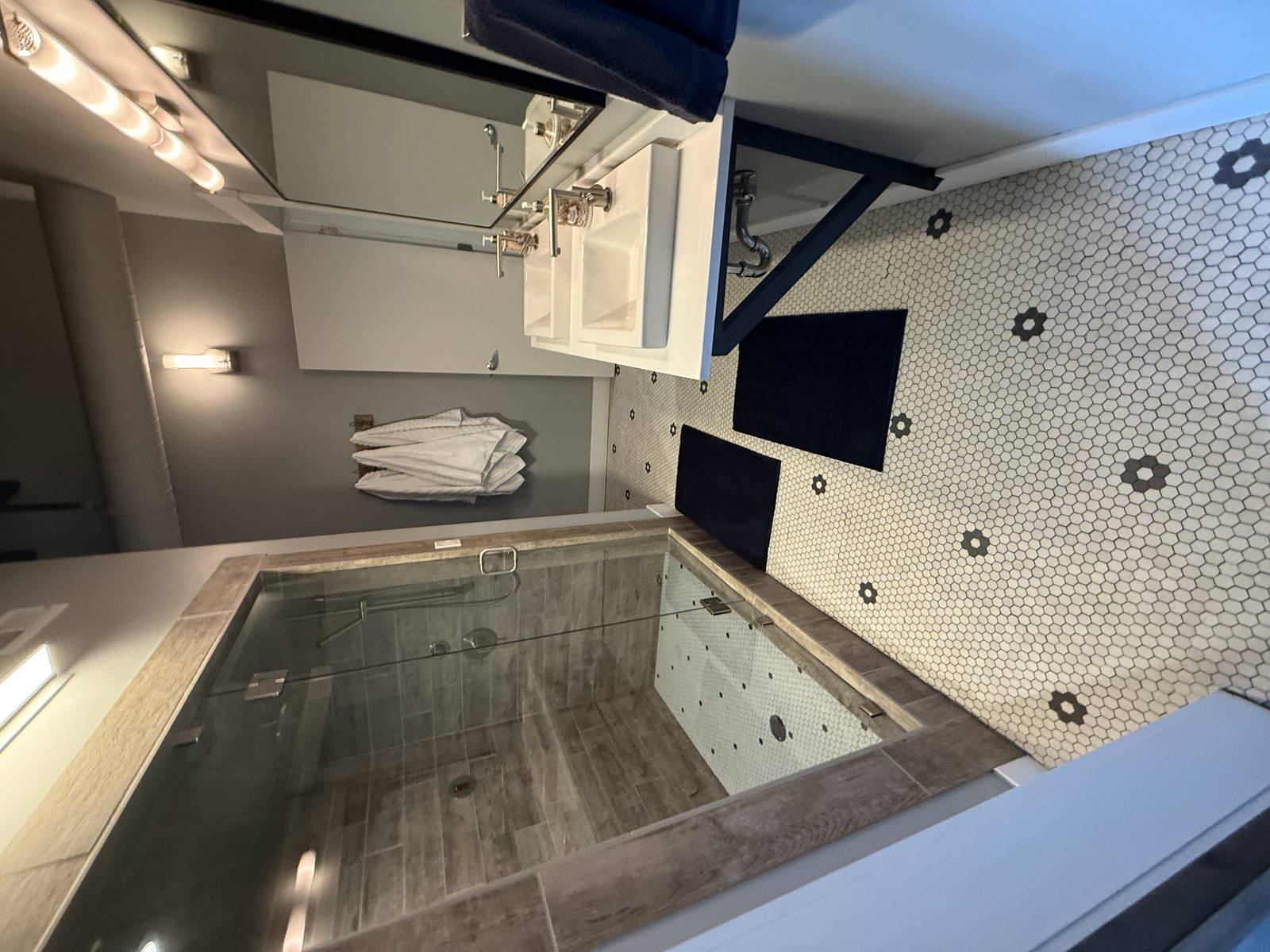
- Rinse and dry. Rinse off loose soap and grime first so the vinegar can reach the mineral.
- Spray and wait. Spray the glass with white vinegar until it’s wet. Let it sit 10 to 15 minutes. Warm vinegar works a little faster.
- Wipe. Wipe with a non-scratch sponge or microfiber cloth, working top to bottom.
- Spot treat. For stubborn spots, lay a vinegar-soaked paper towel on the glass for another 15 minutes, then wipe again.
- Rinse and squeegee. Rinse with plain water, squeegee, and dry with a clean microfiber cloth so new spots don’t form.
If the glass is still cloudy after two rounds, the buildup may be heavy enough for a glass descaler. Some cloudiness that never changes can be etching, which is damage to the glass itself, and no cleaner will remove it.
Windows
Window spots usually come from sprinklers. Mix equal parts white vinegar and distilled water in a spray bottle. Work in the shade or on a cool day, because the mix dries too fast in direct sun and leaves streaks. Spray one pane at a time, let it sit a few minutes, wipe with microfiber, then finish with a squeegee. Rinse the window frame afterward so the vinegar doesn’t sit on paint or metal. Turning sprinkler heads away from the glass stops most new spots before they start.
Faucets and fixtures
Soak a paper towel or cloth in white vinegar and wrap it around the faucet base, spout, or handle. Leave it 15 to 30 minutes. Take it off, scrub the edges and seams with a soft toothbrush, rinse with water, and dry with a cloth. For a showerhead, fill a plastic bag with vinegar, tie it around the head so the nozzles sit in the liquid, and leave it for about an hour before you rinse and run the water.
Check your fixture’s finish before you start. Chrome handles vinegar fine. Matte black, brushed gold, bronze, and other specialty finishes can be damaged by acids, so read the manufacturer’s care guide first and test a hidden spot.
What not to do
- Never mix cleaners. Never mix bleach with vinegar, lemon juice, or any acid descaler, because the combination releases a toxic gas. Use one product at a time and rinse well in between.
- Never use vinegar or other acids on natural stone. Granite, marble, travertine, and limestone can etch and dull. That includes stone counters around the sink and stone shower walls.
- Don’t assume a finish can handle acid. Some fixture finishes and specialty glass can’t. Test a small hidden spot first, every time.
- No abrasive pads on coated glass. Many shower doors have a factory protective coating. Steel wool, scouring pads, and gritty powders can scratch it off for good.
- Don’t let it dry on the surface. Vinegar or descaler left to dry can leave its own film. Rinse and dry when you’re done.
Wear gloves, open a window or run the bathroom fan, and keep the product labels handy.
How to keep hard water stains from coming back
- Squeegee the shower glass after every shower. It takes about 30 seconds and is the single best habit for clear glass.
- Leave the shower door open or run the fan so the glass dries fast.
- Wipe faucets and handles dry with a cloth after you use the sink.
- Do a quick vinegar spray on the glass once a week, before the spots have time to build.
- Aim sprinklers away from windows and glass doors.
A water softener can cut down on mineral buildup across the whole house. Whether one makes sense depends on your water and your home, so talk to a water treatment pro before you buy.
Hard water stains FAQ
What removes hard water stains from glass?
For light spots, white vinegar works well. Spray it on, let it sit for 10 to 15 minutes, wipe with a microfiber cloth, rinse, and dry. For heavy buildup, use a commercial descaler made for glass and follow the label.
Can I mix vinegar and bleach to clean hard water?
No. Never mix bleach with vinegar or any other acid, because the mix releases a toxic gas. Use one product at a time, rinse well, and open a window or run the fan.
Is vinegar safe on granite or marble?
No. Vinegar and other acids can etch and dull natural stone like granite, marble, and travertine. Use a cleaner made for stone instead, and test any product on a hidden spot first.
How do I keep hard water spots off my shower glass?
Squeegee the glass after every shower and leave the door open or the fan on so it dries. A quick wipe of the faucet and handles with a dry cloth helps too.
Will a water softener stop hard water stains?
A water softener can cut down on mineral buildup around the house. Whether one is right for your home depends on your water, so ask a water treatment pro.
When to hand it off
Some buildup is a ten-minute job. Some has been there for years. If you’d rather spend your weekend somewhere other than the shower, Clean Casa can help. Every standard Clean Casa deep clean includes removing hard water scale from shower glass, faucets, and fixtures. We also do house cleaning on a schedule, so the spots don’t get a chance to build back up.
We’re a team of 26, insured, and the team behind 10,000 jobs for hundreds of Utah families. Jobs start at $150, final price depends on home size, condition and scope. A clean casa is a healthy casa.
Let us take the bathroom off your list
Every standard Clean Casa deep clean includes removing hard water scale from glass and fixtures. Book a deep clean, or set up house cleaning on your schedule. Jobs start at $150, final price depends on home size, condition and scope. Serving Ogden to St. George, including Park City and Heber.